Are Flying Ants the Same as Termites?
No. Flying ants and termites are completely different insects.
Flying ants are reproductive ants, sometimes called swarmers or alates. Their job is to leave the colony, mate, and start new nests. The winged ants themselves don’t damage wood structures.
However, the species those swarmers belong to can sometimes cause problems. Carpenter ants, for example, can tunnel through wood to create nesting galleries. They don’t eat wood the way termites do, but large colonies can still cause damage over time.
Termite swarmers serve a similar reproductive role. These winged termites leave their colony to mate and start new colonies when conditions are right.
While swarmers themselves don’t damage wood, their presence often means a termite colony is already nearby — or even inside the structure. Because of this, many homeowners choose to schedule a professional termite inspection if they see swarmers indoors.
In termite colonies, worker termites feed on wood and other cellulose materials, which is what leads to structural damage in homes.
Across Northern California, the most common and destructive species is the subterranean termite, which lives underground and travels into homes through soil and foundations in search of wood.
The Quickest Way to Tell Flying Ants and Termites Apart
If you only remember a few things, remember these four clues.
Body shape
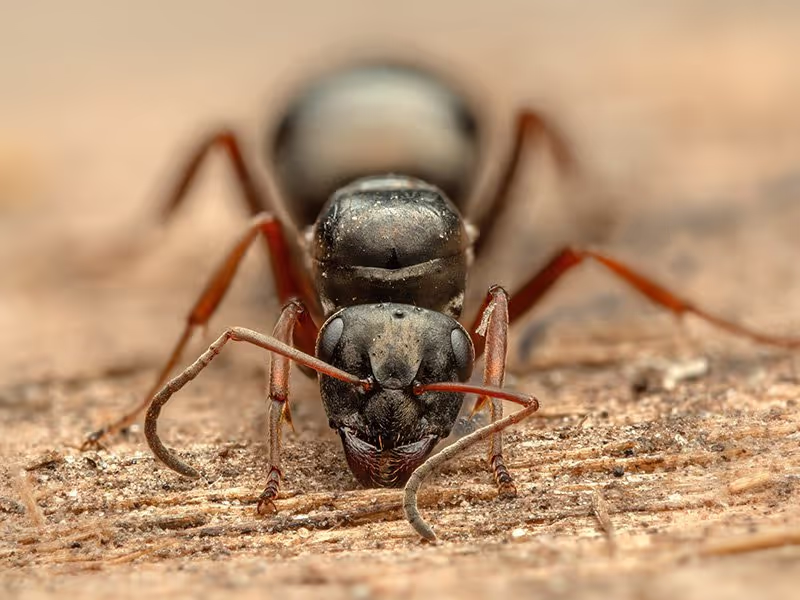
Termite swarmers have a straight, uniform body that almost resembles a tube. Flying ants have a noticeable pinched waist, just like the ants you see outdoors.
Antennae
Termite antennae are straight and bead-like. Flying ants have bent or elbowed antennae.
Wing size
Termites have four wings that are all the same length and extend past their body. Flying ants have front wings that are longer than the back wings.
Wing tips
Termite wings are rounded at the ends and appear almost translucent. Flying ant wings are usually pointed and slightly darker.
One more helpful clue
After swarming, termites quickly shed their wings. If you notice small piles of clear wings on window sills or floors, termites are often the reason.
Why Termites Swarm in Northern California
Swarming is the termite colony’s way of reproducing.
During this stage, winged termites leave the colony to find a mate and start a new colony nearby. In Northern California, subterranean termites often swarm:
- On warm days after rain
- During spring or early summer
- Sometimes during mild fall or winter weather
Weather plays a big role. Warm temperatures combined with moisture can trigger swarming events.
Swarmers are also attracted to light, which is why homeowners often see them around:
- Windows
- Sliding glass doors
- Light fixtures
- Garage doors
And here’s something many people don’t realize:
Seeing swarmers usually means a colony is already nearby.
What Subterranean Termite Swarmers Look Like
Subterranean termite swarmers are usually:
- Dark brown or black
- About ¼ to ½ inch long, including wings
- Equipped with two pairs of long, translucent wings
Unlike ants, their bodies don’t have that pinched waist. Instead, they look straight and narrow from head to tail.
After swarming, termites lose their wings quickly. If you see what looks like tiny fish scales or clear wings on the floor, that’s a classic termite sign.
Do Drywood Termites Swarm Too?
Yes, drywood termites swarm as well.
The difference is where they live.
Subterranean termites live underground and build mud tubes to reach wood.
Drywood termites live directly inside wood.
Drywood termite swarms usually happen later in the year, often during summer or early fall, while subterranean termites tend to swarm earlier, depending on weather conditions.
Because subterranean termites maintain large underground colonies, they are responsible for a large portion of structural termite damage.
Where Northern California Homeowners Usually See Termites
Most homeowners first notice termite activity in places like:
- Window sills
- Light fixtures
- Garage floors
- Sliding glass doors
- Crawl spaces
- Baseboards
Homes in Northern California with crawl spaces, irrigation systems, or wood close to soil are especially attractive to subterranean termites.
These termites need moisture to survive, which is why the following conditions can increase termite risk:
- Poor drainage
- Leaking hose bibs
- Irrigation near foundations
- Damp crawl spaces
Signs You Might Have Termites
Swarmers are one of the most obvious warning signs, but they aren’t the only one.
Homeowners sometimes notice:
- Piles of discarded wings
- Mud tubes along foundations
- Wood that sounds hollow when tapped
- Bubbling paint or uneven walls
- Doors or windows that suddenly stick
Termites are often called “silent destroyers” because they work behind walls, floors, and crawl spaces where homeowners rarely see them.
Are Flying Ants Dangerous to Your Home?
Flying ants are mostly just a nuisance.
They might show up around lights or windows during warm weather, but they don’t eat wood or cause structural damage the way termites do.
The real risk happens when termites are mistaken for ants and the problem is ignored.
A mature termite colony can contain hundreds of thousands of termites quietly feeding on structural wood.
What To Do If You See Termite Swarmers
If you see termite swarmers inside your home, it’s a good idea to schedule an inspection.
Swarming often means:
- A termite colony is very close to the home, or
- A colony may already be inside the structure
A professional inspection can help determine:
- Whether the insects are termites or flying ants
- Where the colony may be located
- The best treatment plan for your home
Schedule Termite Control in Sacramento or Northern California
The best way to protect your home from termite damage is to catch the problem early and use the right termite control strategy.
At Big Time Pest Control, we provide professional termite inspections and termite control services for homeowners in Sacramento and across Northern California. Our local team is experienced in identifying and treating both subterranean termites and drywood termites, the two species most commonly found in homes in our region.
Every service begins with a detailed inspection to determine what type of termite activity is present, where termites may be entering the structure, and what conditions around the home may be attracting them. From there, we recommend a targeted termite control treatment designed to eliminate the infestation and help protect your home moving forward. Professional termite control treatments are designed to eliminate active colonies and help protect the structure from future infestations.
If you’ve seen winged insects around your home this spring — especially near windows, doors, or lights — it’s a good idea to have it checked out.
Contact Big Time Pest Control today to schedule a termite inspection and learn more about your termite control options.
Originally published September 9, 2023. Updated March 2026 with the latest information about termite swarmers and termite control.