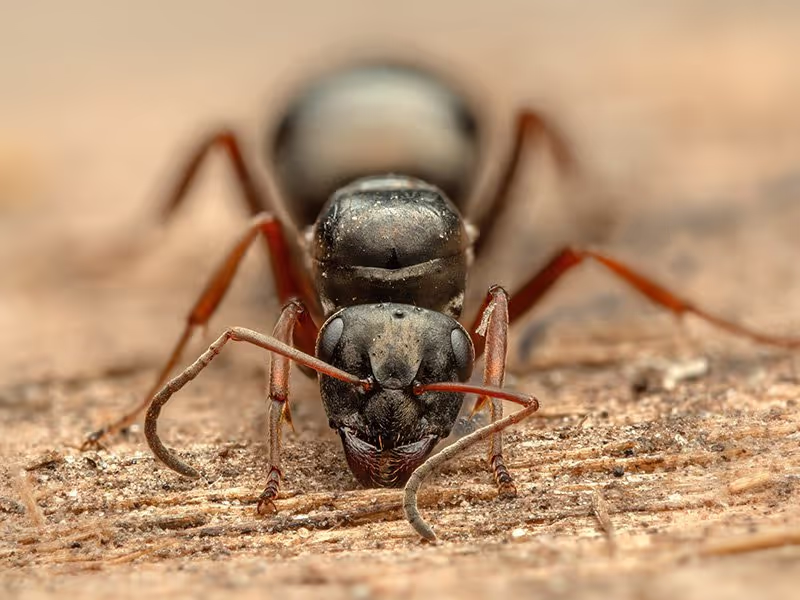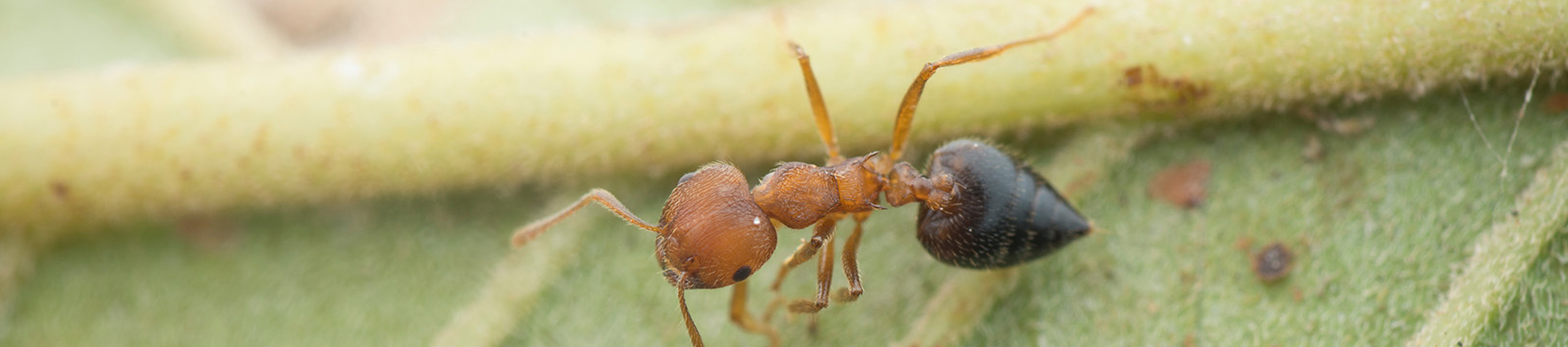
Acrobat ants (Crematogaster spp.) are small, usually around 1/8 of an inch long. Their most recognizable feature is a heart-shaped abdomen that may also resemble an upside-down triangle when viewed from above.
Color varies by species, from yellowish-brown to nearly black. Some are two-toned, with a reddish-brown head and thorax and a much darker abdomen.
They get their name from their defensive posture. When disturbed, acrobat ants lift their abdomen over the thorax and sometimes the head, almost like a gymnast holding a balancing pose.
If the abdomen shape or raised posture is not visible, acrobat ants can be difficult to distinguish from other common ants without magnification.
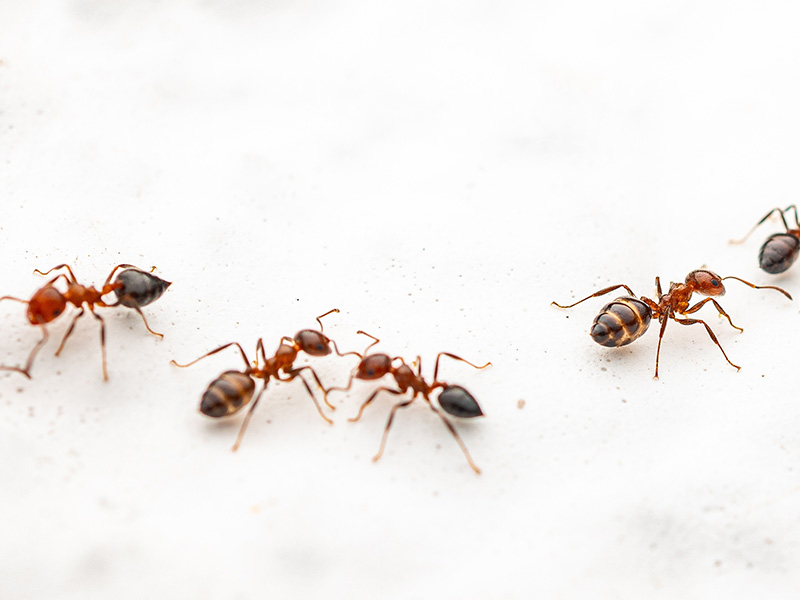
Acrobat ants are least active from December through February, when cooler Northern California weather slows outdoor foraging. Activity increases in March and April, reaches its peak from May through September, and becomes moderate again in October and November.
During the warmest months, workers frequently travel between nests and food sources along trees, fences, utility lines, and rooflines. Colonies nesting in heated wall voids or other protected indoor areas may remain active throughout the year.
Honeydew is one of their favorite foods. Acrobat ants tend aphids, scale insects, and mealybugs on landscape plants and collect the sticky residue those insects produce.
They also prey on small insects and scavenge dead ones. Once inside a home, they may go after sweets and greasy or high-protein foods, including jam, syrup, meat scraps, pet food, and crumbs left on counters or in a toaster tray.
Acrobat ants may bite when their nest is disturbed, but they are not considered a significant biting or stinging threat to people. Bites are uncommon and usually minor.
Workers may also release a sharp, unpleasant odor when alarmed, especially when many ants are disturbed or crushed.
Most acrobat ant activity begins outdoors. Workers travel between their nest and food sources in trees, shrubs, and gardens. They may begin entering a house when they find reliable moisture, food, or a protected nesting cavity.
Once a scout finds something useful, it leaves a trail that other workers can follow. A few ants near a window can quickly become a steady trail along a wall or counter.
Acrobat ants can reach and enter homes through several access routes and openings, including:
Once a worker finds a dependable route, other ants can follow its trail into the structure.
Acrobat ants favor protected cavities, particularly in wood that already holds moisture or has begun to decay.
Outdoors, they may nest in dead or rotting tree limbs, tree cavities, stumps, spaces beneath loose bark, firewood piles, or beneath logs and rocks.
Inside homes, activity may be noticed in kitchens, bathrooms, laundry rooms, and utility rooms near food, plumbing, or moisture. Acrobat ants may also appear in rooms with water-damaged windows or near roof leaks. The nest itself is typically hidden within the structure rather than exposed in the room.
Common indoor nesting sites include:
Acrobat ants do not damage wood in the same way as termites or carpenter ants. They typically nest in wood that has already been softened by moisture or decay and may reuse cavities or galleries made by other insects. Unlike carpenter ants and termites, acrobat ants are not known to cause significant structural damage.
Their presence can still be an important warning sign. Finding acrobat ants in a wall, window frame, or roof edge may indicate moisture-damaged wood, a hidden leak, or an existing rot problem that deserves attention.
Seeing an acrobat ant outdoors does not necessarily mean there is an infestation. A problem is more likely when activity repeatedly occurs inside the home or appears to originate from the structure.
Signs to watch for include:
Winged acrobat ants appearing indoors can indicate that a mature colony is nesting in or close to the structure. Because winged ants are easily confused with termite swarmers, professional identification may be necessary.
Big Time Pest Control’s Guardian home pest control plans provide both immediate relief and ongoing protection from acrobat ants and other common household pests.
Service begins with a thorough initial treatment to eliminate existing pest activity. Four scheduled preventative services each year then help stop ants and other covered pests from returning.
Guardian plans also include interior service as needed and Big Time’s Pest-Free Guarantee. If a covered pest problem develops between scheduled visits, we will return to re-treat your home at no additional charge.
For help with acrobat ants in or around your Northern California home, contact Big Time Pest Control today.
Reducing moisture, removing potential nesting material, and limiting access to the house can make your property less attractive to acrobat ants:

Martin is an asset to your company! He’s very friendly and thorough and very helpful with any questions or concerns that we might have. I am very satisfied with the service he provides. Thank you to Martin and Big Time!!!!
Wayne L.
Anderson, CA

Jamie from Big Time Pest Control is the "BEST!" He calls to let me know he is on his way. He listens to any bug/rodent concerns I have, then does a very thorough treatment of my entire property! Thank you Jamie and Big Time for training your team in such a thorough manner!
Cindy Lou B.
Anderson, CA

Matt is always very thorough and willing to answer questions. He’s also the first person our dog is willing to take treats from. My dog likes you, and you get rid of my ants—that’s a win-win in my book. Thanks, Matt!
Danielle C.
Mt. Shasta, CA


Helpful Tips & Info