
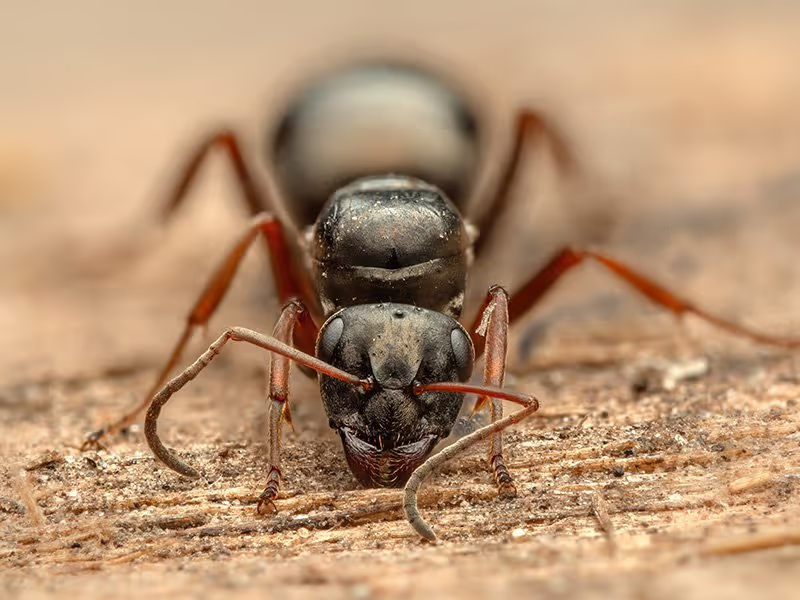
They're Bigger Than You Think
The first thing most homeowners notice is the size. Carpenter ant workers are about ¼ to ½ inch long. That's two to four times the size of the little black ants or Argentine ants that usually show up in NorCal kitchens. The winged ones — the swarmers you might see near windows in spring — can be even larger.
They're typically dark red and black, or sometimes all black. If you look closely, you'll see a pinched waist and elbowed antennae. That pinched waist is actually one of the easiest ways to tell them apart from termites, which have a thick, straight body with no visible waist.
If you're finding large, dark ants inside your home — especially around windows, door frames, or in the kitchen — it's worth finding out exactly what you're dealing with. Our team can identify the species during an inspection and let you know what's going on.
Why Am I Seeing Them Now?
Carpenter ants are most active in Northern California from May through September. Spring is when mature colonies send out swarmers — winged ants that fly out to start new nests. If you're seeing large winged ants near your windows or doors this time of year, that's what's happening.
Here's the part that concerns us when we get these calls. If you're finding winged carpenter ants inside your home, a colony is likely already nesting somewhere in the structure. Swarmers don't fly far from the nest. Finding them indoors usually means the problem is a lot closer than most people expect.
NorCal's wet winters make this worse. All that rain weakens wood around your home's foundation, window frames, and eaves. When spring hits and temperatures climb, carpenter ants come out of dormancy and head straight for those vulnerable areas.
In older homes around Sacramento and Anderson, we often find them around aging window trim and roofline areas where small leaks have gone unnoticed for a while. It's a pattern we see play out every single year.
What Attracts Carpenter Ants to a Home?
Here's something that surprises a lot of people. Carpenter ants don't eat wood. They tunnel through it to create space for their nests. What actually draws them in is moisture.
Homes with hidden water damage are the most at risk. That could be a window frame that's been leaking for a while, wood around a bathroom with poor ventilation, or siding near a sprinkler that's been hitting the house. Once they find weakened wood, they move in and start excavating.
Common places we find carpenter ants in NorCal homes include bathroom framing, kitchen window trim, crawlspace joists, and anywhere a slow leak has gone unnoticed. They're also drawn to properties with stacked firewood near the house, tree stumps, leaf debris, and overgrown landscaping. These conditions give them easy outdoor nesting spots, and from there, it's a short trip inside.
A lot of these conditions are tough to spot on your own. That's one reason our technicians do a full property inspection — we check the areas you can't easily see and figure out what's attracting them before the colony gets any bigger.
Warning Signs You Shouldn't Ignore
Carpenter ant damage usually starts behind walls and in hidden areas, so you won't always see the colony itself. But they leave clues.
Signs of carpenter ants in Northern California homes include small piles of sawdust-like shavings — called frass — near baseboards, door frames, or window sills. Carpenter ants push this debris out of their tunnels as they dig. If you keep finding fine wood shavings in the same spot, that's a strong sign they're inside the wood nearby.
You might also hear a hollow sound when you tap on wood that should be solid. Shed wings near windows or doorways indicate swarmers, which means a mature colony is nearby. And if you're regularly seeing large ants at night — that's when carpenter ants are most active — don't brush it off.
A few sugar ants in the kitchen are a nuisance. A few carpenter ants in the kitchen could mean structural damage is already underway.
If you're not sure whether you're dealing with carpenter ants or something else, give us a call. We can inspect your home and identify exactly what's going on before the damage gets worse.
How Much Damage Can Carpenter Ants Really Do?
More than most people realize. Carpenter ants start with moist, softened wood. But as the colony grows, they expand into sound timber, too. Over time, they weaken structural supports, wall studs, and door frames from the inside out.
The problem is that the damage builds slowly. It can take months or even years before you notice sagging floors, crumbling wood, or soft spots in the walls. By then, the colony has been at work for a long time, and the repairs can get expensive.
That's why we always tell homeowners — if you see the signs, don't wait. Catching a carpenter ant problem early is a lot cheaper than fixing the damage later. We deal with these calls constantly from spring through summer, and the ones that go smoothest are always the ones where the homeowner called early.
How We Handle Carpenter Ants at Big Time
When you call us about carpenter ants, we don't just spray where you saw them and leave. We start with a full inspection to locate the colony, figure out where they're getting in, and identify the moisture conditions that brought them there.
Our technicians are GreenPro and QualityPro certified, and they know NorCal carpenter ant behavior inside and out. They know where colonies like to set up, how they move through a structure, and what it actually takes to get rid of them for good.
Carpenter ants are covered under our Guardian home pest control plans, which include four scheduled visits per year, rodent protection, spider web and wasp nest removal, and our Pest-Free Guarantee. If covered pests come back between visits, we return at no extra charge.
With 4.9 stars from over 2,400 reviews, homeowners across Northern California trust Big Time Pest Control to keep their homes protected year-round.
Don't Wait — Protect Your Home This Spring
If you're seeing large ants, finding wood shavings, or noticing winged ants near your windows, now is the time to act. Carpenter ant problems only get worse — and more expensive — with time.
Big Time Pest Control serves Redding, Anderson, Chico, Sacramento, and communities throughout Northern California. We offer same-day and Saturday service so you can get answers fast.
Call us at (530) 378-2930 or contact us online to schedule your inspection.
Carpenter Ant FAQs for Northern California Homeowners
How can I tell if I have carpenter ants or termites?
Carpenter ants are larger (¼ to ½ inch), dark-colored, and have a pinched waist with elbowed antennae. Termites are smaller, pale, and have a thick, straight body with no visible waist. Carpenter ants also leave behind sawdust-like frass, while termites build mud tubes. If you're not sure which pest you're seeing, a professional inspection can identify the problem quickly.
Where do carpenter ants usually nest inside homes?
Carpenter ants usually nest in weakened wood around window frames, crawlspaces, kitchens, bathrooms, rooflines, and wall voids. In Northern California homes, we often find them near slow leaks or areas where water damage has gone unnoticed for a while.
Are carpenter ants worse after rain?
Yes. Carpenter ant activity often increases after wet Northern California winters because prolonged rain weakens wood around homes. That creates ideal nesting conditions, especially around eaves, siding, and older window trim.
Why am I seeing carpenter ants at night?
Carpenter ants are mostly active after dark, which is why homeowners often notice them at night in kitchens, bathrooms, or near windows. Repeated nighttime activity inside the home can point to a nearby colony.
When should I call a pest control company about carpenter ants?
As soon as you notice the warning signs — large ants indoors, frass, shed wings, or hollow-sounding wood. Most homeowners we help thought the ants were just passing through at first. The earlier you catch a carpenter ant problem, the easier it is to stop the damage from spreading.


