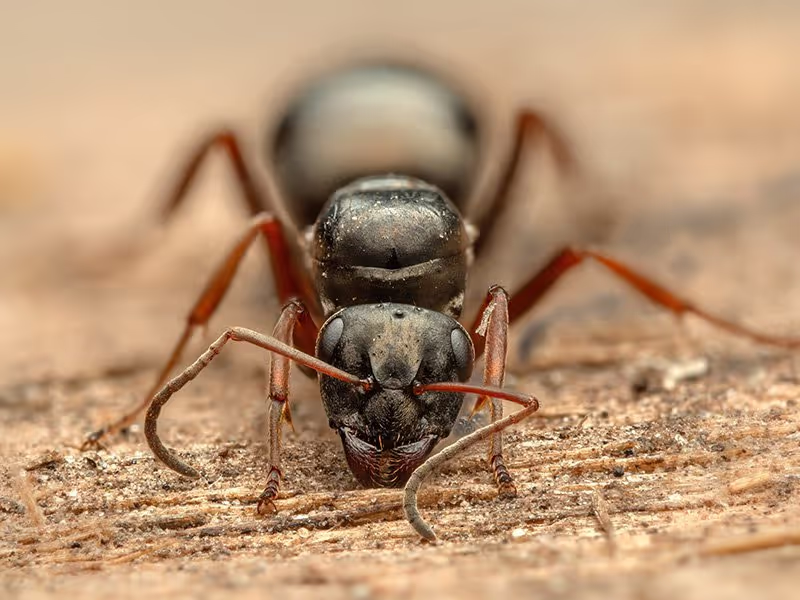
Crazy ants are small — about 1/8 inch long — with dark brown to black bodies covered in fine, wispy hairs. They have noticeably long legs and antennae compared to most household ants.
But the easiest way to spot them isn't by how they look — it's by how they move.
Most ants march in neat, predictable lines. Crazy ants dart around in fast, jerky, zigzag patterns with no clear direction. That erratic movement is where they get their name. If you're watching ants near your kitchen counter or along a baseboard and their movement looks chaotic, there's a good chance you're dealing with crazy ants.
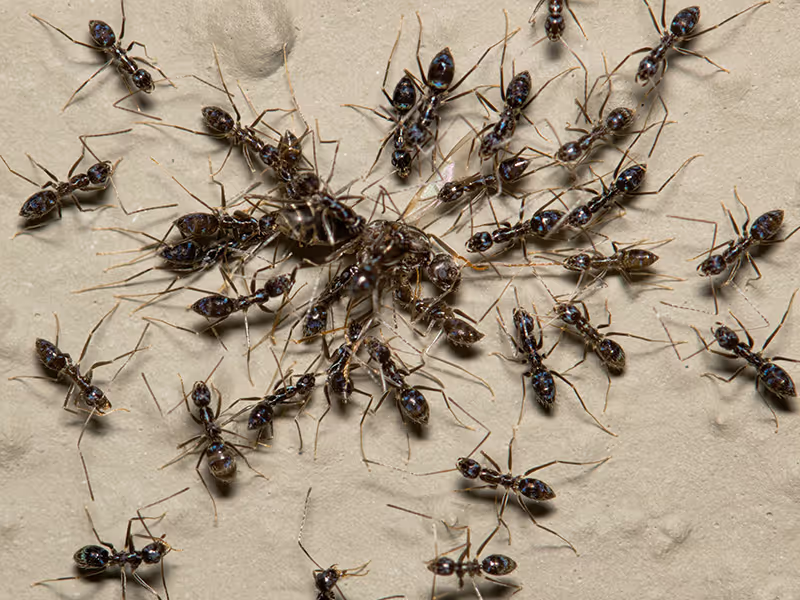
Crazy ants are most active during warmer months, generally spring through fall. In Northern California cities like Sacramento, Chico, and Redding, they can stay active later into the season than many other ant species — especially if they've found a warm spot inside a home.
Outdoors, crazy ants nest in moist, sheltered spots — under rocks, landscape timbers, mulch, potted plants, or debris near the foundation. Indoors, they often show up in wall voids, behind baseboards, under appliances, and near plumbing.
They're also known for getting into electrical equipment — outlets, junction boxes, and HVAC units — which sets them apart from most other household ants.
Like most ants, crazy ants come inside looking for food, water, or shelter. A few crumbs, moisture around a sink, or a gap near a door frame is all the invitation they need.
Heavy rain can also push crazy ants indoors. When outdoor nesting areas become too wet, they'll move into wall voids, gaps around windows, or spaces near plumbing to escape excess moisture.
One thing that makes crazy ants different is how far they travel. Crazy ants forage much farther from their nests than many other species, so the colony doesn't have to be right next to your house for them to end up in your kitchen. They're also drawn to warm, sheltered areas inside homes.
Crazy ants aren't picky. They'll go after sweets, grease, protein, crumbs — pretty much anything. Outside, they feed on dead insects, honeydew from aphids, and plant material. Inside, kitchens and pantries are the main targets.
Their flexible diet is one reason they establish themselves so quickly once they get in.
Crazy ants aren't considered dangerous to people, but they can become a major nuisance once colonies get established indoors.
Unlike carpenter ants or termites, they don't damage wood or structural materials. However, they are attracted to electrical equipment. When large numbers gather inside outlets, circuit breakers, AC units, or other electronics, they can sometimes cause short circuits or equipment malfunctions.
For most homeowners, the biggest problem is their sheer numbers and how quickly colonies spread.
A few small changes around your home can make it less attractive to crazy ants:
Prevention helps, but once crazy ants establish multiple nesting sites around a property, professional treatment is often the most effective solution.
Crazy ants can be difficult to eliminate once colonies become established.
Traditional ant control often relies on baiting along defined ant trails, but crazy ants don't follow organized trails the way many other ants do. Their colonies can also contain multiple queens and thousands of workers spread across several nesting sites.
Spraying the ants you see may scatter them temporarily, but it rarely solves the problem — and can sometimes make things worse by pushing colonies deeper into wall voids or hidden areas.
Because of how quickly they spread and relocate, professional treatment is usually the most effective path to long-term control.
At Big Time Pest Control, we start by identifying the species and locating where the activity is coming from. Because crazy ants don't trail like other ants, we look at their movement patterns, inspect common nesting areas, and check around electrical equipment and moisture sources to locate the colony.
From there, we treat active nesting sites and entry points around the exterior using products designed to be carried back to the colony. If there's activity inside, we address that during the initial service as well.
Because crazy ants spread easily and can relocate when disturbed, ongoing service is usually the best approach. Our residential pest control program includes regular exterior treatments throughout the year, along with interior service as needed, to help keep ants and other common household pests under control.
It's backed by a pest-free guarantee — if a covered pest shows up between visits, we'll come back and take care of it at no additional cost.
If you're seeing fast-moving ants around your kitchen, bathrooms, outlets, or foundation in Sacramento or elsewhere in Big Time’s Northern California service area, don't wait for the problem to spread.
Our local pest control team can identify the species, locate nesting activity, and help get the problem under control.
Give us a call today or request a quote online.
Crazy ants can bite, but they're not aggressive and their bites are usually minor. Most homeowners never experience problems beyond the nuisance of large numbers indoors.
Crazy ants can produce winged reproductive ants during certain times of the year, but homeowners are much more likely to notice worker ants running around indoors than large swarms of flying ants.
Yes. Crazy ant colonies can spread across large outdoor areas, which means neighboring homes, yards, or connected properties may all experience activity from the same population.

Martin is an asset to your company! He’s very friendly and thorough and very helpful with any questions or concerns that we might have. I am very satisfied with the service he provides. Thank you to Martin and Big Time!!!!
Wayne L.
Anderson, CA

Jamie from Big Time Pest Control is the "BEST!" He calls to let me know he is on his way. He listens to any bug/rodent concerns I have, then does a very thorough treatment of my entire property! Thank you Jamie and Big Time for training your team in such a thorough manner!
Cindy Lou B.
Anderson, CA

Matt is always very thorough and willing to answer questions. He’s also the first person our dog is willing to take treats from. My dog likes you, and you get rid of my ants—that’s a win-win in my book. Thanks, Matt!
Danielle C.
Mt. Shasta, CA


Helpful Tips & Info