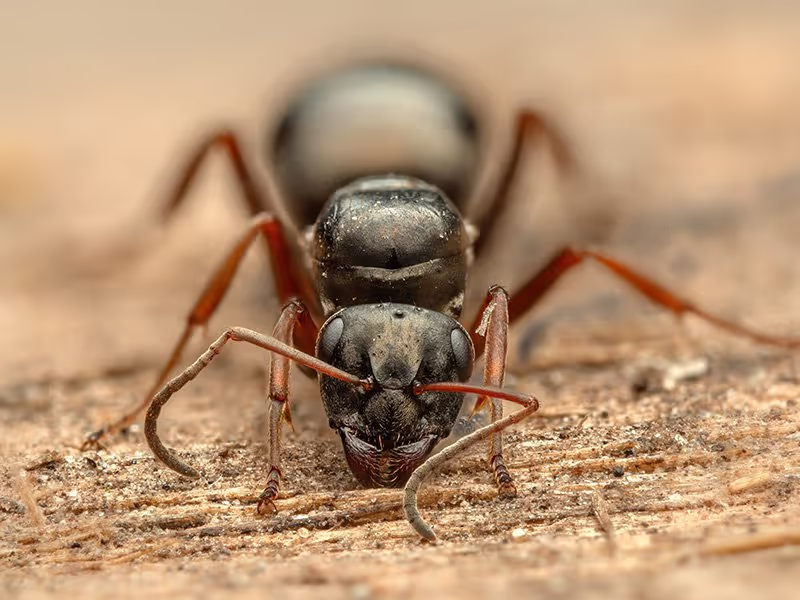
If you’re noticing tiny black ants marching across your kitchen counters or along baseboards, you may be dealing with little black ants—one of the most common nuisance ants found in California homes.
They’re small, persistent, and great at finding food sources. While they aren’t dangerous, they can quickly become a recurring frustration if not properly addressed.
Common Name: Little Black Ant
Scientific Name: Monomorium minimum
Key Traits:

Little black ants are most active from May through September, when warm weather drives heavy foraging. During the peak of summer, heat and dry conditions often push them indoors in search of water, leading to increased sightings inside homes.
Activity slows significantly from December through February, when cooler temperatures keep most ants hidden in their nests—though indoor activity can still occur in heated homes.
Little black ants are easy to miss individually—but their trails give them away.
If you’re seeing a steady line of ants traveling to a food source, there’s likely a colony nearby.
This ability to spread is one reason infestations can be difficult to fully eliminate without addressing the colony's source.
Little black ants thrive in a variety of California environments and typically nest:
Around Sacramento, Redding, and throughout Northern California, little black ants are most noticeable in the warmer months—but once inside, they can remain active year-round.
Once inside, they often nest in:
They usually enter homes in search of food and moisture. Most homeowners first notice them in the kitchen or near sinks, particularly during the summer.
These ants are especially drawn to:
During Northern California’s hot, dry summers, little black ants often move indoors in search of reliable water sources.
No—but they are a nuisance.
However, they can:
If you’re seeing them consistently, there’s likely a nearby colony.
Correct identification matters. Here’s how they compare:
Argentine ants are especially important to distinguish in California—they behave differently and require different treatment approaches. Visit our Pest Guide page to learn more about other ant species in Northern California.
Many store-bought treatments only address the ants you see—not the colony behind them.
Challenges include:
That’s why infestations often return after DIY attempts.
Prevention helps, but established colonies usually require more targeted solutions.
If you’re dealing with recurring ant trails or can’t seem to get rid of them, professional help can make a big difference. Our local, family-owned pest control company has been serving Northern California since 2001 and has extensive experience treating ant infestations throughout Sacramento, Redding, and NorCal.
When you reach out for help solving an infestation of little black ants, Big Time Pest Control will:
Tired of seeing ants in your home? Our residential pest control services not only eliminate the ants already active, but ongoing pest treatments stop them from coming back.
Contact Big Time Pest Control today to schedule your inspection.
Here are answers to some common questions we hear from homeowners:
Many homeowners use the term “sugar ants” to describe small ants attracted to sweets. Little black ants are often called sugar ants, but several species can fall under that nickname.
Yes. Many infestations start outdoors, but ants regularly travel indoors to forage for food and water.
Most little black ants you see do not have wings.
However, reproductive ants (called swarmers) can develop wings at certain times of year and leave the nest to start new colonies.

Martin is an asset to your company! He’s very friendly and thorough and very helpful with any questions or concerns that we might have. I am very satisfied with the service he provides. Thank you to Martin and Big Time!!!!
Wayne L.
Anderson, CA

Jamie from Big Time Pest Control is the "BEST!" He calls to let me know he is on his way. He listens to any bug/rodent concerns I have, then does a very thorough treatment of my entire property! Thank you Jamie and Big Time for training your team in such a thorough manner!
Cindy Lou B.
Anderson, CA

Matt is always very thorough and willing to answer questions. He’s also the first person our dog is willing to take treats from. My dog likes you, and you get rid of my ants—that’s a win-win in my book. Thanks, Matt!
Danielle C.
Mt. Shasta, CA


Helpful Tips & Info