Why Wasps Get More Aggressive in Late Summer
A wasp colony follows a predictable arc. A single queen starts the nest in spring, and through early summer the workers are focused almost entirely on building and raising young. The colony is small, and the wasps are relatively uninterested in you.
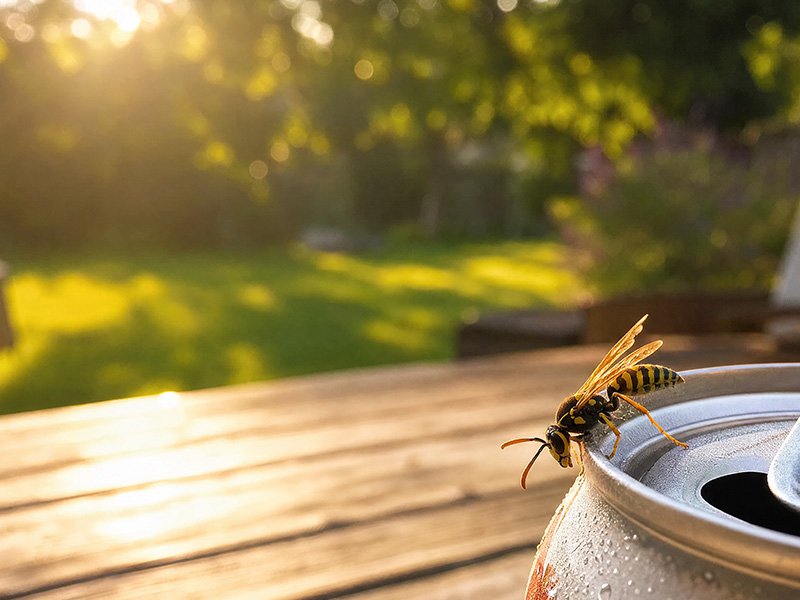
By August, that’s flipped. The nest has reached its largest size of the year, which means more wasps competing for food and defending a bigger investment. At the same time, the colony’s natural food sources — other insects, nectar — start running short as the season winds down. That’s why you suddenly notice them crashing your backyard barbecue, hovering around soda cans, and turning up at the trash. They’re hungry, there are a lot of them, and they’re quick to defend the nest. Add Sacramento’s stretch of high heat, and you’ve got insects that are stressed, active, and short-tempered.
The practical takeaway: the same nest you could walk past in June may aggressively defend itself in August.
Know What You’re Dealing With
Not every stinging insect behaves the same way, and identification matters when you’re deciding how careful to be.
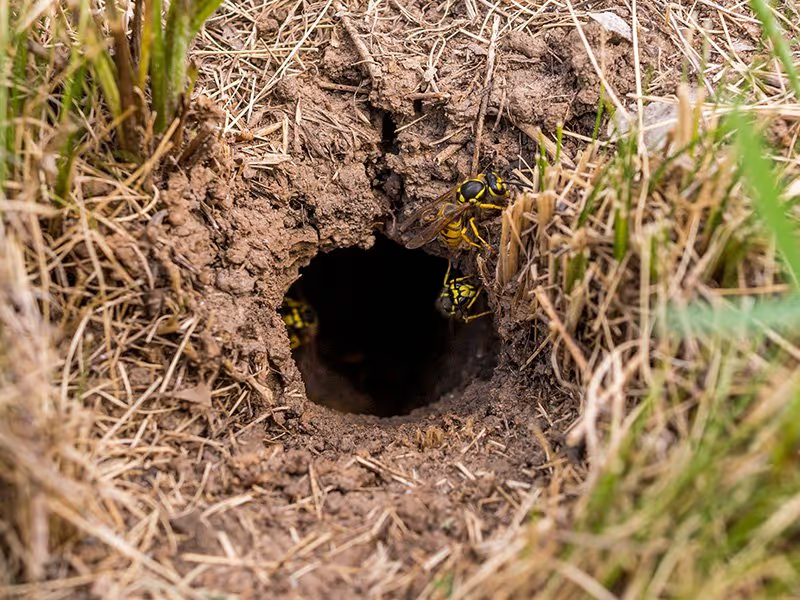
Yellow jackets are the ones most people run into and the most likely to sting. They’re often ground-nesters — building in old rodent burrows, wall voids, and under decks — which makes them easy to disturb by accident with a lawnmower or a footstep. They’re aggressive, they can sting repeatedly, and a disturbed nest can send out dozens of defenders at once.
Paper wasps build the familiar open, umbrella-shaped nests hanging from eaves, porch ceilings, and railings. They’re less aggressive than yellow jackets but will absolutely sting if you get near the nest. It’s worth knowing that the European paper wasp — an invasive species now widespread across California — often turns up alongside native paper wasps and can be mistaken for a yellow jacket thanks to its bright yellow-and-black markings.
Bald-faced hornets build large, enclosed, papery nests — sometimes the size of a basketball — usually up in trees or on the side of a structure. They’re highly defensive of that nest and are best left entirely to a professional.
Why DIY Removal Goes Wrong This Time of Year
A can of wasp spray from the hardware store makes late-summer nest removal look simple. It rarely is, and August is the riskiest month to try.
The nests are big. A mature colony can hold hundreds of wasps. Spray-can range is limited, and if you don’t take out the whole nest on the first try, you’re now standing near a very angry, very awake colony with a product that’s already half empty.
Ground and hidden nests fight back. Yellow jacket nests inside walls, under decks, or in the ground often have entrances you can’t fully see. Spraying the opening you can see doesn’t reach the colony, and the wasps come pouring out of exits you didn’t know were there.
Reactions are the real danger. Wasps and yellow jackets can sting multiple times, and multiple stings mean a bigger dose of venom. For anyone with an allergy, even a single sting can be a medical emergency — and plenty of people don’t know they’re allergic until it happens. A panicked reaction near a ladder or on a roof adds a fall risk on top of the stings.
Knocking down a nest doesn’t end it. Removing a visible nest without treating the colony often just scatters the wasps, and a nest built inside a wall void can leave you with problems even after the wasps are gone.
What You Can Do Safely Right Now
There’s plenty of low-risk prevention worth doing while you leave the actual nests to a pro:
- Keep outdoor trash cans tightly lidded and rinsed out — sugary residue is a magnet in late summer.
- Cover food and drinks at outdoor gatherings, and be cautious with open soda cans (a yellow jacket crawling inside is a common sting source).
- Seal gaps around rooflines, vents, and utility openings where wasps look to nest.
- Do a quick visual check of eaves, railings, and the ground around your yard from a safe distance so you know where nests are — but don’t approach or disturb them.
If you find an active nest, the safest move is to keep people and pets away from the area and call a professional rather than tackling it yourself.
When to Call Big Time
If you’ve got an active nest — especially a ground nest, a hidden one in a wall, or a large enclosed hornet nest — this is exactly the kind of job worth handing off. Our team removes nests safely, treats the colony so it doesn’t just relocate, and helps you close up the entry points that invited them in.
Even better, wasp nest removal up to one story is built right into our ongoing residential pest control plans — so instead of paying for a one-off treatment every time a new nest shows up, you’re covered year-round as part of your regular service. It’s the easiest way to stay ahead of stinging insects through peak season and beyond.
We offer same-day and Saturday service when you call before noon, so you don’t have to spend the weekend giving your backyard over to wasps.
Get a free wasp control quote or contact us today. Sacramento: (916) 621-6536.
Frequently Asked Questions
Do wasps reuse the same nest next year?
No. Yellow jackets, paper wasps, and bald-faced hornets build annual colonies that die off as the weather cools, and the nest is not reused. New queens overwinter on their own and start fresh nests in different spots the following spring — which is why an empty nest left in place isn’t a sign the problem is solved, and why sealing up entry points matters more than the old nest itself.
Will a wasp nest go away on its own in the fall?
Technically, yes. The colony dies off once cold weather sets in. But that can be weeks or even months away, and in the meantime, you have a large, active, easily provoked colony sitting near your home during its most aggressive stretch of the year. Waiting it out means living with the risk that whole time, so it’s rarely worth it if the nest is anywhere close to where people or pets spend time.
When is a wasp or yellow jacket sting a medical emergency?
A normal reaction is localized pain, redness, and swelling. Seek medical help right away if you notice signs of a serious allergic reaction — trouble breathing, swelling of the face, lips, or throat, dizziness, a rapid pulse, hives spreading beyond the sting site, or nausea and vomiting. Multiple stings at once may also warrant medical attention, especially for children, older adults, or anyone with a known allergy. When in doubt, treat it as urgent and call for help.
Does Big Time's pest control plan cover wasp nest removal?
Yes. Wasp nest removal up to one story is included in our ongoing Guardian Plans, so nests that appear during your regular service are handled as part of the plan rather than as a separate charge. It's the simplest way to stay protected through peak stinging-insect season without booking a new treatment every time.
Serving Sacramento, Chico, Redding, Anderson, and communities across Northern California since 2001.