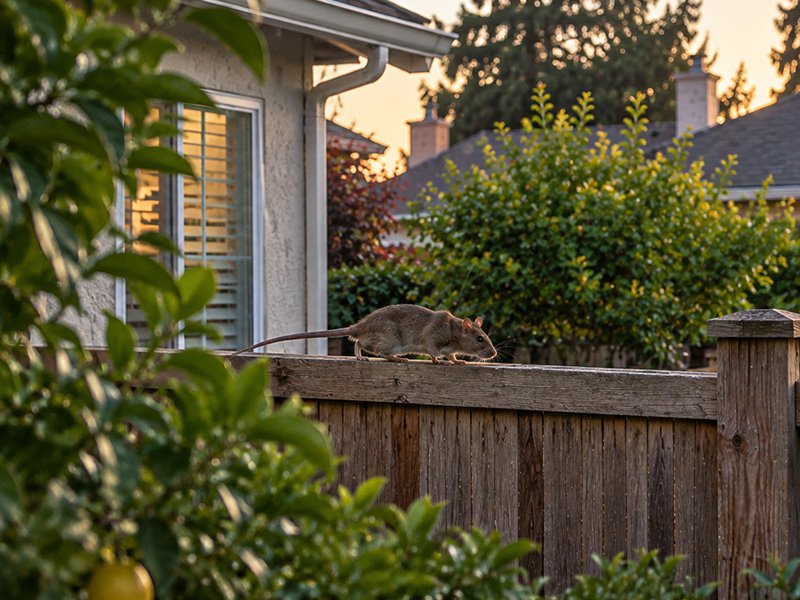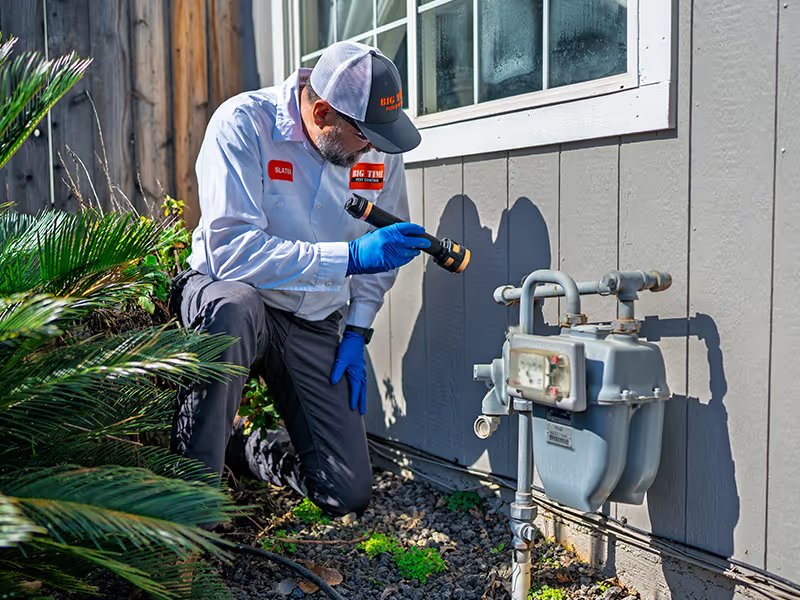
Rodent exclusion, a technical term for mouse-proofing or rat-proofing, is the process of permanently sealing structural gaps that rats and mice use to enter a home. Its goal is to prevent rodent infestations.
What Rodent Exclusion Is (and What It Isn’t)
Rodent exclusion is the process of identifying and sealing the openings rats and mice use to enter a structure.
It’s different from basic rodent control.
- Rodent control removes rodents that are currently inside (trapping, baiting, etc.).
- Rodent exclusion prevents rodents from getting in.
If entry points aren’t sealed, rodents will continue to re-infest — no matter how many are removed.
For most NorCal homes, including those in the foothills or on river-adjacent properties, the best solution is a combination of removal and structural sealing.
Want help right away? Request a free quote or give us a call!
Why Rodent Problems Are So Common in Northern California
Our region creates ideal conditions for rodents:
- Mild winters mean rodents stay active.
- Older homes often have small structural gaps.
- Attics and crawlspaces provide warm nesting areas.
- Urban and suburban development pushes rodents toward homes.
When outdoor food sources shift — especially in fall and winter — rats and mice look for stable shelter. Homes provide warmth, insulation, and protection from predators.
If there’s even a small opening, they’ll test it.
Unfortunately, there’s a risk associated with rodent infestations. Beyond the “gross factor,” rodent problems can lead to:
Health Concerns
Rodent droppings and urine can contaminate surfaces and indoor air. California public health guidance emphasizes keeping rodents out and cleaning safely to reduce hantavirus risk. (See CDPH guidance.)
Property Damage
Rodents chew insulation, stored goods, and sometimes electrical components.
How Small an Opening Can a Mouse Fit Through?
This surprises most homeowners.
- A mouse can squeeze through a gap as small as ¼ inch — about the width of a pencil.
- A rat can fit through an opening roughly the size of a quarter.
That tiny gap near a pipe?
The worn corner of a garage door?
The vent without reinforcement?
Those are entry points.
Common Rodent Entry Points in Northern California Homes
Every house is different, but these areas frequently allow access:
- Gaps around plumbing and utility lines
- Garage door corners and weather stripping
- Attic and crawlspace vents
- Roofline gaps near eaves and soffits
- Construction joints where materials meet
- Unscreened vents or openings in outbuildings
- Damaged fascia boards or roof returns
Rodents are persistent. If they smell food or shelter inside, they will work at weak spots.
Concerned rodents are in your home? Our article, Signs of Rodent Activity, is a good starting point.
What Rodent Exclusion Typically Includes
Good exclusion work is detailed and structural — not just foam in a hole.
Here’s what a thorough process usually looks like.
1) A Detailed Inspection (Inside + Outside)
Look for:
- Active signs (droppings, rub marks, nesting)
- Entry points (including roofline and foundation-level gaps)
- Conditions that attract rodents (food sources, harborage, moisture)
If you’re not sure whether you’re dealing with rats or mice, these quick references can help:
2) Sealing Entry Points with Rodent-Resistant Materials
The goal is permanent reinforcement.
Depending on location, this may include:
- Hardware cloth or steel mesh
- Metal flashing
- Reinforced vent covers
- Professional-grade sealants
- Structural repairs to damaged wood
It’s not about filling space — it’s about blocking access in a way rodents cannot chew through.
3) Addressing Rodents Already Inside
One common concern:
“If we seal everything, won’t rodents be trapped inside?”
That’s why exclusion is typically paired with a targeted removal plan first. Active rodents are addressed before final sealing is completed.
This prevents odor issues or inaccessible die-off inside walls.
If you’re hearing activity right now, don’t wait. The longer rodents have access, the more damage they cause. Schedule your inspection today.
If you’re seeing signs right now, you may also find this helpful: Should I Worry if I See Just One Mouse?
4) Reducing Attractants Around the Home
Sealing entry points works best when combined with basic prevention steps:
- Store pet food in sealed containers
- Keep trash secured
- Remove clutter in garages and sheds
- Trim vegetation away from the home
- Fix moisture problems around the foundation
When food and shelter are limited, rodents are less motivated to test your home.
Additional Tips for Northern California Homeowners
- Install rodent-proof door sweeps: Ensure all exterior doors have tight-fitting sweeps to block access for rodents.
- Consider rodent-proof vent covers: These are especially important for crawl spaces and attics where rats can enter.
- Regular inspections: Even after sealing entry points, make it a habit to inspect your home annually for new cracks or gaps that may have developed.
Rodent Exclusion vs. DIY Baiting: What Works Better?
Baiting and trapping can reduce current rodent numbers.
But without exclusion, new rodents will replace them.
Exclusion addresses the root cause: access.
For many Northern California homeowners and businesses, the most sensible path is to partner with a local pest control company, well-versed in rodent exclusion and control, to address current activity and to prevent repeat infestations.
Signs You May Need Rodent Exclusion
You should consider an inspection if you notice:
- Scratching in the attic or walls at night
- Droppings in the pantry or garage
- Chewed packaging or wires
- Pets staring at walls or ceilings
- A strong, musky odor in enclosed spaces
Even if activity seems minor, early exclusion prevents larger infestations later.
Keep in mind that mice and rats aren’t the only culprits that invade attics. You could be dealing with a raccoon or other nuisance animal. If that’s the case, our wildlife control services may be the right fit.
Can Homeowners Do Rodent Exclusion Themselves?
In some cases, yes.
If you can clearly see a small gap under a door or around a pipe, sealing it with the proper material can absolutely help. Installing door sweeps, replacing damaged vent screens, and improving food storage are all smart homeowner steps.
But here’s where DIY exclusion often falls short:
Rodent entry points aren’t always obvious.
Many of the most common access areas are:
- Along the roofline
- Behind fascia boards
- In crawlspaces
- Around attic returns
- Hidden where materials meet
It only takes one missed opening — sometimes as small as ¼ inch — for the problem to continue.
Our local pest control team regularly inspects homes where visible gaps were sealed, but roof returns, attic vents, or foundation transitions were overlooked. From the ground, everything looked secure. From the ladder or inside the attic, it wasn’t.
There’s also the safety factor. Proper exclusion often requires:
- Ladder work
- Roof access
- Crawlspace navigation
- Working near insulation and contaminated areas
For many homeowners, the question isn’t “Can I seal a gap?” It’s “Can I confidently identify and reinforce every entry point?”
That’s where professional experience matters.
At Big Time Pest Control, rodent exclusion isn’t just sealing holes; it’s a full structural evaluation designed to stop repeat infestations. We know where Northern California rodents test homes first, and we reinforce those areas accordingly.
If you’re comfortable handling minor fixes, that’s great. But if rodents keep returning, it’s usually a sign that something structural was missed.
Why Northern California Homeowners Trust Big Time for Rodent Exclusion
Rodent exclusion is detail-heavy work. It requires understanding how roof rats, Norway rats, and house mice behave in our region and where they typically gain access.
As a family-owned Northern California company, Big Time Pest Control approaches exclusion as structural protection, not a temporary fix.
We focus on:
- Thorough inspections from roofline to foundation
- Durable, rodent-resistant materials
- Addressing active rodents before final sealing
- Long-term prevention, not repeat service cycles
Our goal isn’t just to reduce activity — it’s to secure your home so rodents don’t come back.
Ready to Stop Rodents From Coming Back?
If you’ve already dealt with rodents once — or more than once — sealing entry points is usually the missing step.
A professional rodent exclusion inspection will show:
- Where rodents are getting in
- What areas need reinforcement
- What it will take to properly secure the structure
From there, many homeowners choose to pair exclusion with our home pest control services for ongoing protection and year-round monitoring.
When the structure is sealed and the exterior pest pressure is managed, recurring rodent problems become far less likely.
If you’re in Sacramento, Redding, or elsewhere in Northern California, Big Time Pest Control can help you put a permanent stop to rodent access. Don’t wait for rodents to take over; request an evaluation today!
FAQ: Rodent Exclusion in NorCal
Does homeowners insurance in California cover rodent damage?
In many cases, insurers treat rodent damage as preventable maintenance, so it may not be covered—but coverage varies by policy and carrier. If you’re unsure, check your policy wording or ask your provider. Regardless, exclusion helps reduce the chance of future damage.
Can rats chew through foam or caulk?
Yes. Basic foam or caulk alone is not rodent-proof. Reinforcement with metal mesh or flashing is usually required.
How soon can you get here?
At Big Time Pest Control, our goal is to offer same-day and Saturday services for fast relief. All you have to do is call before noon!
Originally published December 15, 2024. Updated February 2026 to reflect expanded guidance on rodent exclusion and prevention in Northern California.