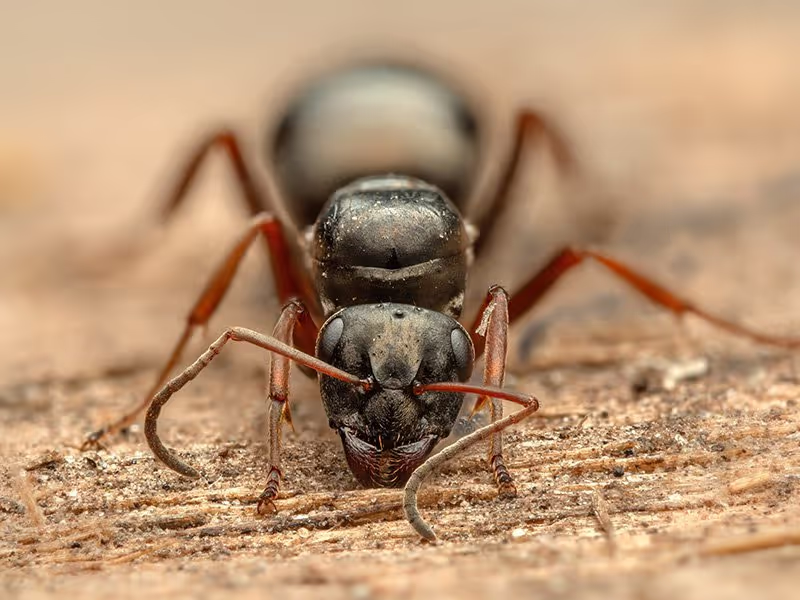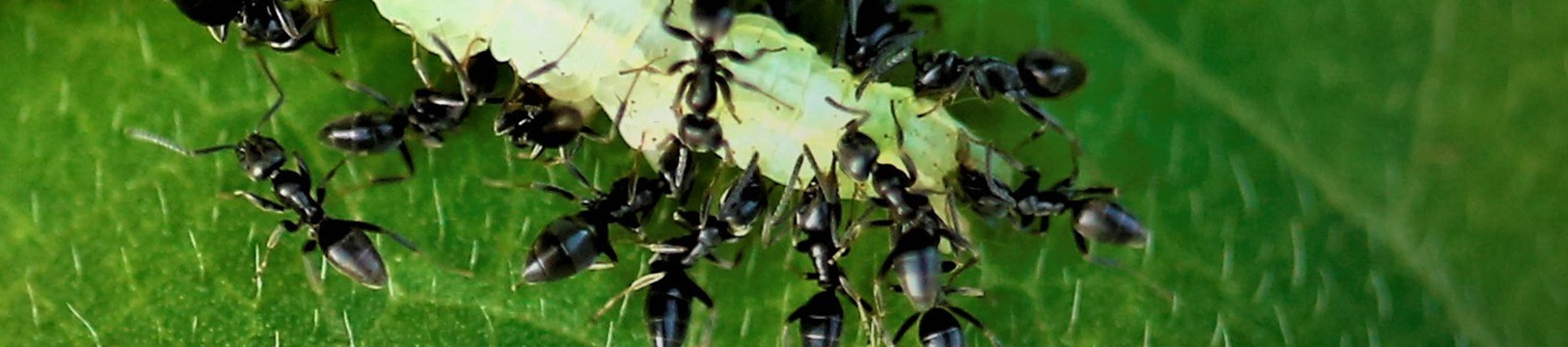
White-footed ants are small — about 1/8 inch long — with dark brown to black bodies. Their name comes from the pale, yellowish-white coloring on their lower legs and feet.
That lighter color is the main feature that separates them from many other small dark ants. From a distance, they may look like ordinary tiny black ants. Up close, the pale feet stand out against the darker body.
They also tend to move in large, steady trails. If you are seeing a constant stream of small dark ants along walls, windows, exterior siding, or rooflines, and the ants appear to have lighter feet, you may be dealing with white-footed ants.
White-footed ants are most active during warm weather. In Northern California, activity usually increases in late spring and can stay high through summer and early fall, especially around irrigated landscaping, mature trees, shaded rooflines, and areas with steady moisture.
They slow down during cooler months, but they may not disappear completely. If a colony has access to indoor warmth, moisture, or protected nesting space, activity can continue year-round inside.
White-footed ants nest in many different places, which is one reason they can be so frustrating.
Outside, they may nest in trees, under loose bark, in leaf litter, in mulch beds, in old woodpiles, in landscape timbers, in palm fronds, in rain gutters, and around rooflines. Around Northern California homes, trails may be seen along stucco, siding, fences, patio covers, gutters, eaves, and roof edges.
Inside, they may appear in attics, wall voids, around windows, near plumbing, and in kitchens or bathrooms where moisture is present. Because they can nest at ground level and higher up on a structure, you may notice trails running up the side of the house before ants appear indoors.
White-footed ants enter homes in search of food, moisture, and protected nesting sites. Sugary residue, crumbs, fruit, juice spills, syrup, and small amounts of standing water near sinks or plumbing can draw them inside.
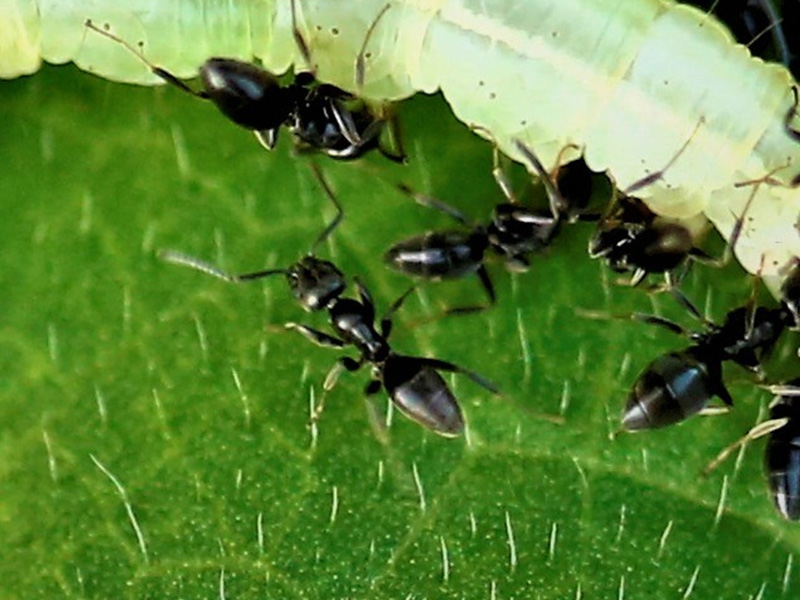
They are also strongly connected to honeydew, a sweet substance produced by aphids, scale insects, and mealybugs on outdoor plants. If ornamental shrubs, trees, or other landscaping are close to the home, white-footed ants may already be foraging nearby before they find a crack, gap, window frame, or roofline opening that leads inside.
Outdoors, white-footed ants feed heavily on honeydew from plant-feeding insects. This is why they are often active around trees, shrubs, and landscaped areas.
Inside, they are most attracted to sweets. They may feed on fruit, juice spills, syrup, sugary crumbs, and other sweet residues. They can also feed on dead insects and other protein sources, but sweet foods are usually the bigger draw.
White-footed ants do not sting and rarely bite. They are not known to damage wood or other structural materials, and they are not considered a major health threat.
The main issue is their volume. White-footed ant colonies can become very large, sometimes with multiple queens and multiple nesting sites. When they start trailing through a kitchen, bathroom, attic, or wall void, the number of ants can feel overwhelming.
White-footed ants are more difficult to control than many common household ants because the visible trail is only a small part of the problem. The colony may be large, spread out, and nesting in more than one location.
They also do not respond to many ant baits the way other household ants do. Many ant baits depend on foraging ants carrying food back and sharing it through the colony. White-footed ants do not rely on that process the same way. Much of the colony’s food can come from special unfertilized eggs produced inside the nest, which means bait may not move through the colony well enough to solve the infestation.
Spraying the ants you see with DIY products may temporarily reduce activity, but it usually does not reach the larger colony. That is why white-footed ant problems often return after homeowners think they have handled them.
At Big Time Pest Control, we’ve helped Northern California homeowners with ant problems since 2001. We start by confirming the type of ant you’re dealing with because white-footed ants can look similar to other small dark ants at first glance, but the treatment approach is different.
Our technicians examine the trails, nesting areas, moisture sources, landscaping, rooflines, gutters, and entry points to determine where the activity is coming from and how the ants are getting inside.
From there, we treat the current activity and target the areas where white-footed ants are trailing, nesting, or entering the home. For ongoing protection, our residential pest control program provides year-round exterior treatments with interior service as needed.
Big Time’s residential pest control program is backed by a pest-free guarantee. If a covered pest shows up between visits, we will come back and take care of it at no additional cost.
White-footed ants often start around trees, shrubs, mulch, gutters, and rooflines before they move inside. If they find a small opening near a window, pipe, or roof edge, they may follow food or moisture into the home.
Not exactly. Many homeowners call any small ant in the kitchen a “sugar ant,” but white-footed ants are their own type of ant. They are attracted to sweet foods, but their large colonies and unusual feeding behavior make them harder to control than many common kitchen ants.
Cleaning up sweets, crumbs, and spills can help reduce what draws them indoors, but it usually will not eliminate the colony. White-footed ants often nest outdoors, in wall voids, or around rooflines, so the source of the activity may be away from the area where you see them.
White-footed ants do not go away on their own. If you are seeing steady activity around your kitchen, bathroom, windows, roofline, or exterior walls, there may be a much larger colony nearby.
Big Time Pest Control helps homeowners in Redding, Chico, Sacramento, Anderson, and nearby Northern California communities identify and control ant problems.
Give our team a call, and we’ll identify what you’re dealing with and put together a plan to address it. You can also request a quote online.

Martin is an asset to your company! He’s very friendly and thorough and very helpful with any questions or concerns that we might have. I am very satisfied with the service he provides. Thank you to Martin and Big Time!!!!
Wayne L.
Anderson, CA

Jamie from Big Time Pest Control is the "BEST!" He calls to let me know he is on his way. He listens to any bug/rodent concerns I have, then does a very thorough treatment of my entire property! Thank you Jamie and Big Time for training your team in such a thorough manner!
Cindy Lou B.
Anderson, CA

Matt is always very thorough and willing to answer questions. He’s also the first person our dog is willing to take treats from. My dog likes you, and you get rid of my ants—that’s a win-win in my book. Thanks, Matt!
Danielle C.
Mt. Shasta, CA


Helpful Tips & Info